
Use pea gravel for soft, barefoot-friendly finishes on walkways and seating areas; use crushed gravel for structural bases, driveways and anywhere drainage or load-bearing matters. In freeze-thaw climates, crushed gravel is the safer default under patios, foundations and vehicle surfaces, because its angular particles compact and resist frost heave better than round stone. We provide crushed gravel and pea gravel, matched to the job rather than the budget alone.
Table of Contents
- Crushed gravel vs pea gravel: a side-by-side look
- Why drainage and frost resistance favour crushed gravel
- How to prepare the base: a step-by-step workflow
- What drives cost, and how to order the right amount
- Maintenance, wear patterns and seasonal care
- Regional priorities: what matters most in freeze-thaw climates
- How we can help with your gravel project
- FAQ
- Sources
Crushed gravel vs pea gravel: a side-by-side look
Pea gravel is naturally rounded, typically 6 to 20 millimetres across, smoothed by water or weathering. Crushed gravel is mechanically fractured rock with angular faces that interlock under compaction, which is why specifications for base materials often require a minimum percentage of fractured faces for durability.
That shape difference drives almost every practical decision you will make. Round particles roll past each other and never truly lock, so pea gravel stays loose underfoot and shifts over time. Angular particles wedge together, which is exactly what you want under a patio, driveway or retaining structure carrying weight.
Grading also matters. A well-graded crushed base mixes particle sizes with some fines to fill voids and compact densely, while pea gravel is usually a single, narrow size range meant to stay loose and decorative rather than structural, a distinction confirmed in our own landscaping aggregate guidance.
Pea gravel works best for:
- Pathways, patio topdressing and play areas where comfort underfoot matters more than rigidity.
- Decorative borders, planting beds and drainage swales with light foot traffic only.
Crushed gravel works best for:
- Compacted base layers under pavers, patios, sheds and driveways.
- French drains, weeping tile backfill and any application needing high seepage capacity with structural stability.
If your priority is comfort and appearance, pea gravel wins. If it is load-bearing or water management, crushed gravel is the only reasonable choice.
Why drainage and frost resistance favour crushed gravel
Edmonton’s freeze-thaw cycles put more stress on outdoor surfaces than most homeowners expect. The fix is a free-draining zone that lets water escape before it can freeze and heave.
Clear crushed stone is the standard choice for that zone because its angular voids drain quickly and resist clogging with fines. Our own aggregate guidance notes that well-drained granular backfill prevents uplift in frost-susceptible soils and extends the life of drainage systems.
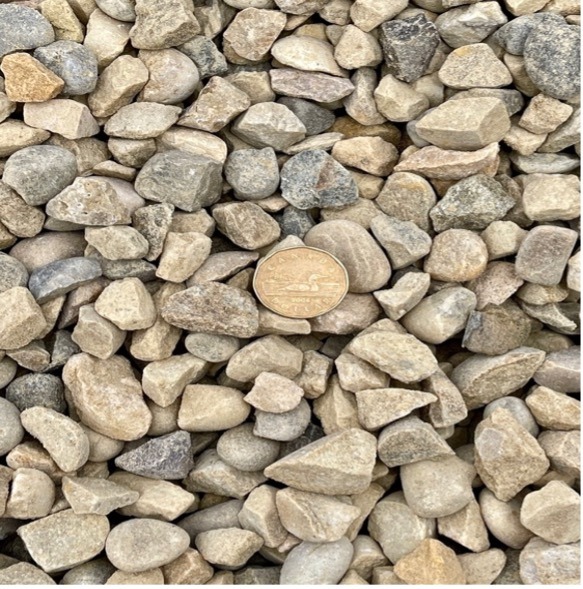
Government design guidance for drainage structures reinforces the same principle: filter and drainage materials should be clean, durable gravel, and where seepage is high, engineers specify a two-zone filter and drainage arrangement to prevent piping and silting.
Slope matters just as much as material. National guidance on foundation protection recommends a consistent 1% grade moving water away from buildings, since even small grading errors can redirect runoff toward a foundation and raise moisture risk significantly. That same slope discipline applies to patios: a flat or backward-sloping patio becomes a seasonal ice rink and a long-term heave hazard.
Clean, durable crushed gravel loses material at a significantly slower rate than uncrushed gravel under comparable traffic and weather conditions, according to transport infrastructure guidance on unpaved surfaces. That durability difference is one reason crushed material is specified for anything expected to bear repeated load or exposure.
- Pea gravel drains surface water but does not resist frost heave on its own.
- Crushed stone drainage zones must be properly detailed with geotextile to stay free-draining long-term.
- A 1% grade is the baseline target for any patio or walkway near a structure.
How to prepare the base: a step-by-step workflow
Getting the base right determines whether a patio lasts five years or twenty. The sequence below reflects what we specify on residential jobs across the Edmonton region.
- Excavate and evaluate the subgrade. Remove organic soil and topsoil completely, since decomposing material settles unevenly and will telegraph through any surface above it.
- Lay geotextile fabric where native soil is clay-heavy or saturated. Fabric separates soil from aggregate and stops fines from migrating up into your drainage layer over time.
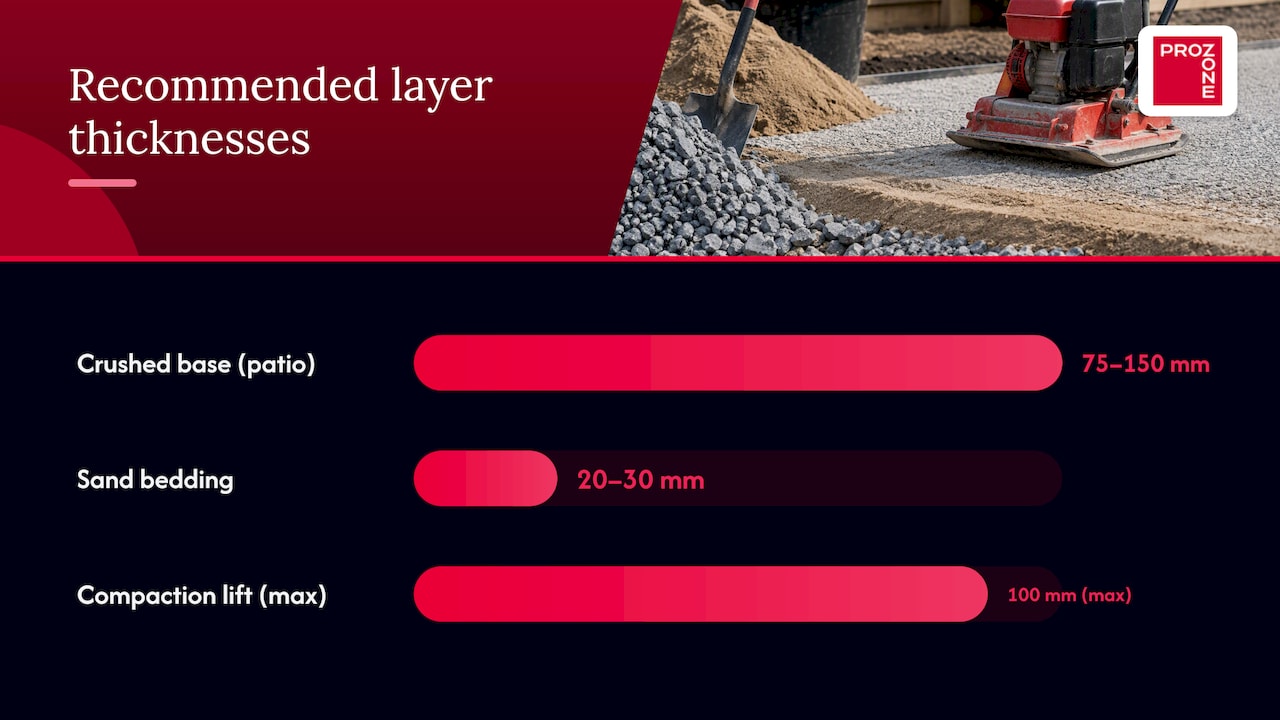
- Place and compact the crushed base. For a small residential patio, 75 to 150 millimetres of well-graded Road Crush compacted in lifts is typical; driveways and anything carrying vehicle loads need a thicker, better-graded section with higher compaction effort.
- Add a bedding layer if pavers are going down. A 20 to 30 millimetre sand bedding layer sits directly under pavers to allow fine levelling.
- Install edge restraint before placing the finish layer. Plastic or metal edging keeps both pea gravel and paver systems from spreading, which is especially important once frost action starts working on loose material.
- Finish with pea gravel or pavers. A pea gravel finish needs periodic raking and top-up; a paver surface over a crushed base needs almost none.
Homeowners planning to calculate excavation volumes or material takeoffs before ordering can use tools like cut and fill estimating software to size the job accurately before material arrives.
Pro Tip: Always compact crushed base in lifts no thicker than 100 millimetres; compacting a single deep lift leaves the bottom loose no matter how long you run the plate compactor.
What drives cost, and how to order the right amount
Price depends less on the material itself and more on three variables: whether the stone is washed and clean, how far it has to travel, and whether you are paying for spreading and compaction labour or doing it yourself. Clean, screened crushed gravel for drainage applications typically costs more per tonne than general fill because of the processing involved.
To estimate quantity, convert your project’s cubic metres to tonnes using a rough density of 1.6 to 1.8 tonnes per cubic metre for compacted crushed gravel, then order a small surplus to cover compaction settlement. Pea gravel is lighter and looser, so volume-based ordering is usually more practical than weight-based.
- Washed, clean aggregate costs more than unscreened material but performs significantly better in drainage applications.
- Delivery distance and site access both affect final price, especially for larger loads.
- Spreading and compaction labour often costs more than the material itself on complex sites.
Our gravel and sand category lists current product options and delivery availability for the Edmonton area, including both Road Crush and Premium Pea Rock.
Maintenance, wear patterns and seasonal care
Pea gravel surfaces lose material to foot traffic, wind and rain splash, and most residential installations need topping up periodically to maintain depth and appearance. Crushed bases rarely need full replacement, but rutting or localized sinking signals a compaction failure that should be dug out and recompacted rather than patched over.
Winter brings its own demands. Sanding walkways improves traction without damaging either material, but de-icing salts can accelerate the breakdown of some softer aggregate types over repeated seasons.
- Expect to top up pea gravel finishes periodically, more often in high-traffic areas.
- Recompact, don’t just backfill, any rutting or sinking in a crushed base.
- Clear snow with a plastic shovel blade to avoid scattering loose pea gravel.
Pro Tip: If a crushed base section keeps sinking in the same spot every spring, the subgrade below it likely has a frost-susceptible soil pocket that needs to be excavated and replaced, not just topped up.
Regional priorities: what matters most in freeze-thaw climates
In our experience serving the Edmonton region, the projects that fail early are almost always the ones where grading and drainage were treated as afterthoughts rather than engineered decisions. A patio with the wrong base material or a flat grade will show frost heave within one or two winters, regardless of how good the surface finish looks on day one.
We provide crushed gravel for base and drainage work and pea gravel for finish applications, and recommend a site assessment any time drainage, slope or soil type is uncertain. Simple pathway projects on stable, well-drained soil are reasonable DIY territory; anything touching a foundation, retaining wall or driveway base is worth a professional look first.
— ProZone
How we can help with your gravel project
Choosing the right material is half the job. Getting it delivered, spread and compacted correctly is the other half, and following Alberta Safety Codes and using quality-controlled materials makes the difference between a patio that lasts and one that needs rework in two years.
Consultations, flexible delivery scheduling, and direct supply of crushed and pea gravel sized to your project are available. Our services page outlines our full sitework and construction capabilities, and our landscape supplies centre covers ordering details for aggregates and related materials.
- A free estimate can be requested through the online form or by calling directly.
- Browse Road Crush specifications or Premium Pea Rock details before you order.
- Information about delivery scheduling and on-site material drops is available for larger projects.
Get in touch through our contact page to book your free estimate or arrange material delivery for your next project.
FAQ
What is crushed gravel good for?
Crushed gravel is best for structural base layers under patios, driveways and pavers, and for drainage applications like French drains and weeping tile backfill. Its angular shape locks under compaction, giving it the stability and load-bearing capacity that rounded stone cannot match.
When should you not use pea gravel?
Avoid pea gravel anywhere it needs to bear vehicle weight, support a structure, or stay perfectly level, since its rounded particles never fully lock together. It is also a poor choice on slopes without strong edge restraint, because it migrates downhill with foot traffic and rain.
Which is cheaper, crushed stone or pea gravel?
Pricing depends on washing, processing and delivery distance rather than the material type alone, so there is no single universal answer. Clean, screened aggregate of either type typically costs more than unscreened fill because of the extra processing involved.
Is 3/4 crushed the same as a gravel?
“3/4 crush” refers to a specific crushed gravel gradation where most particles pass a 3/4 inch sieve, and it is one of several standard sizes used in base and drainage work. It is not interchangeable with pea gravel, since it is angular, well-graded and intended for compaction rather than a loose decorative finish.
How do I prevent frost heave under a patio?
Frost heave is best prevented with a free-draining crushed base and a consistent slope that moves water away from the area, following the 1% grade guidance used in foundation protection. Geotextile fabric between native soil and the crushed layer also helps keep the drainage zone free of fines over time.