
The best bike lane surfacing materials pair a structural asphalt or concrete base with durable, anti-skid surface treatments, such as methyl methacrylate (MMA) resin, thermoplastic, or preformed thermoplastic, specified for plow resistance and winter maintenance access. Paint-only systems fail fast under repeated snow clearing. Specify plow resistance ratings and skid resistance test data in your procurement documents, and require winter maintenance access as a design condition, not an afterthought.
Table of Contents
- What are the main bike lane surfacing materials and how do they perform?
- How does winter weather affect bike lane surfacing materials?
- What base construction and drainage details prevent premature failure?
- How do you specify and procure durable bike lane surfacing materials?
- ProZone’s approach to durable, winter-ready bike lane construction
- Why Prozoneltd is the right supplier for your next bike lane project
- Sources
- FAQ
What are the main bike lane surfacing materials and how do they perform?
Every bike lane starts with a structural decision before anyone talks about colour or markings. The base layer, asphalt or concrete, carries the load and resists Alberta’s freeze-thaw cycles, while the surface treatment handles visibility, skid resistance, and winter durability.
Asphalt remains the most common base for cycling path materials. It flexes with ground movement, accepts overlays for resurfacing, and repairs quickly with localized patching. The tradeoff: without a properly compacted base, asphalt is prone to frost heave and cracking during Edmonton’s freeze-thaw swings.
Concrete offers a longer service life under heavy pedestrian and cyclist loading, and it holds up well in high-traffic municipal corridors. Its main weakness for cycling comfort is joint spacing and reflective cracking, which transmit vibration through a bike tire far more than a smooth asphalt surface does. Detailing joints properly reduces this problem significantly. Compare the two structurally in our breakdown of asphalt versus concrete performance in Alberta conditions.
Beyond the structural base, four treatment categories dominate bike path materials specifications:
- MMA (methyl methacrylate) systems: two-part resin coatings that cure rapidly even in cool temperatures and resist snowplough abrasion far better than paint.
- Thermoplastic: heat-applied material offering strong durability and skid-resistant finishes, often used for coloured contrast panels.
- Preformed thermoplastic: factory-manufactured sheets applied with heat, ideal for symbols, arrows, and long-life green contrast panels.
- Coloured bonded overlays: thin, adhered systems that boost visibility but require careful thickness control to avoid transmitting vibration to riders.
StreetBond thermoplastic products are engineered specifically for pedestrian and cyclist zones, with retroreflective bead options and factory-applied anti-skid textures. For preformed thermoplastic, thickness matters: road applications typically run around 125 mil, while bike lane applications are usually specified closer to 90 mil to balance durability against rider comfort.
How does winter weather affect bike lane surfacing materials?
Winter is where surfacing choices get tested, and where budget corners get exposed. Ploughing, salt exposure, and repeated freeze-thaw cycling wear surfaces at a rate summer inspections never reveal.
Thin paint markings degrade fastest under plough contact. Every pass of a blade scrapes a fraction of the coating away, and by mid-winter, faded lane lines leave cyclists with no visual guide at all. MMA and extruded MMA line materials resist plough abrasion and salt exposure considerably better than water-based paint, which is why municipal specifiers increasingly favour resin systems for high-conflict crossings and contrast panels.
Winter reality check: Canada experiences a significant number of cycling fatalities annually, many of which involve motor vehicles. Obstructed or unclear bike lanes force cyclists into traffic lanes, directly raising collision risk during winter months.
Skid resistance isn’t a marketing term, it’s a measurable property. Specify surface treatments backed by ASTM E-303 friction testing or equivalent third-party data, particularly for intersection approaches and grades where braking distance matters most.
A workable maintenance model includes:
- Priority tiers: clear primary cycling corridors within 24 hours of snowfall ending, secondary routes within 48 hours.
- Equipment sizing: use narrow, purpose-built clearing equipment rather than full-width plough trucks that push snow into the lane.
- Design coordination: build in pull-off zones so plough operators aren’t forced to dump snow directly into the cycling space.
Painted lanes running alongside parking are especially vulnerable. Street clearing frequently pushes snow directly into the adjacent cycling space, rendering the lane unusable until a second clearing pass, if one ever comes.
What base construction and drainage details prevent premature failure?
A surfacing material is only as good as what sits beneath it. Skimping on base preparation is the single most common reason a cycling path materials investment underperforms within a few winters.
Alberta’s frost depth demands a properly engineered base course, typically compacted road crush, thick enough to distribute load and resist heave. Calgary’s roads construction standard specifications outline compaction and base thickness benchmarks that Alberta municipalities commonly reference, and they’re a solid starting point for any specification document. Our own base course guide for durable Alberta roads walks through compaction targets in more technical detail.
Drainage is where many bike lane projects quietly fail. Standing water freezes into ice sheets that create both a safety hazard and an accelerant for surface deterioration through repeated freeze-thaw expansion. Minimum cross slopes and edge details need to move water away from the riding surface, not pool it at the curb line where ploughs create scours that refreeze overnight.
Specification checklist items worth writing directly into contracts:
- Minimum 2% cross slope to prevent ponding on the riding surface.
- Compaction testing (proctor density) at defined intervals along the base course.
- Saw-cut joint patterns detailed at transitions to curb, driveway aprons, and shared-use paths.
- Edge detailing that prevents plough blades from catching and lifting the surface edge.
Edmonton’s complete streets construction guide provides standard drawings that make acceptance testing far less ambiguous during contract closeout. Include bond strength verification and surface finish inspection as mandatory acceptance criteria before signing off on any bike lane paving contract.
How do you specify and procure durable bike lane surfacing materials?
Getting the right material on paper is one thing. Getting it written into a contract that actually protects the municipality’s investment is another. Use this as a working checklist when drafting specifications:
- Define required service life for both the base structure and the surface treatment, stated separately.
- Set warranty periods tied to material type; MMA and thermoplastic warranties typically run longer than paint.
- Require a plow resistance rating from the manufacturer, backed by field or lab data.
- Mandate skid resistance testing (ASTM E-303 or equivalent) as a submittal requirement.
- Verify installer qualifications, including prior municipal project references and manufacturer certification.
- Write clearing priority tiers directly into maintenance contracts, not as a verbal understanding.
- Cap clearing equipment size for protected or separated lanes to avoid plough-induced surface damage.
- Include acceptance testing for bond strength and surface finish before final payment release.
Lifecycle costing changes the calculation considerably. A MMA or extruded system costs more upfront but reduces reapplication frequency across a four to six year window, often undercutting repeated paint reapplication on total cost per year. Run a simple cost comparison: divide total installed cost by expected years of service, then compare that annualized figure against a paint system that needs recoating every one to two seasons.
Municipal procurement documents benefit from language borrowed from established frameworks; a useful reference is this field guide to municipal construction procurement, which covers contract clause structuring relevant to surfacing and maintenance obligations.
Pro Tip: Require a sample installation area, roughly 50 to 100 metres, before committing to a full corridor rollout. One winter cycle on a test section reveals plough compatibility and skid performance far more reliably than any manufacturer data sheet.
ProZone’s approach to durable, winter-ready bike lane construction
Bike lane durability isn’t decided on a spec sheet, it’s decided on the installation crew’s understanding of Alberta’s freeze-thaw cycle. We build surfacing systems, from structural asphalt and concrete bases through thermoplastic and similar surface treatments, with that reality as the starting assumption, not an afterthought.
Our project history spans municipal, commercial, and private infrastructure work, documented in our project gallery. We supply road crush and aggregates for base courses, keeping material quality and installation sequencing coordinated rather than split across multiple suppliers.
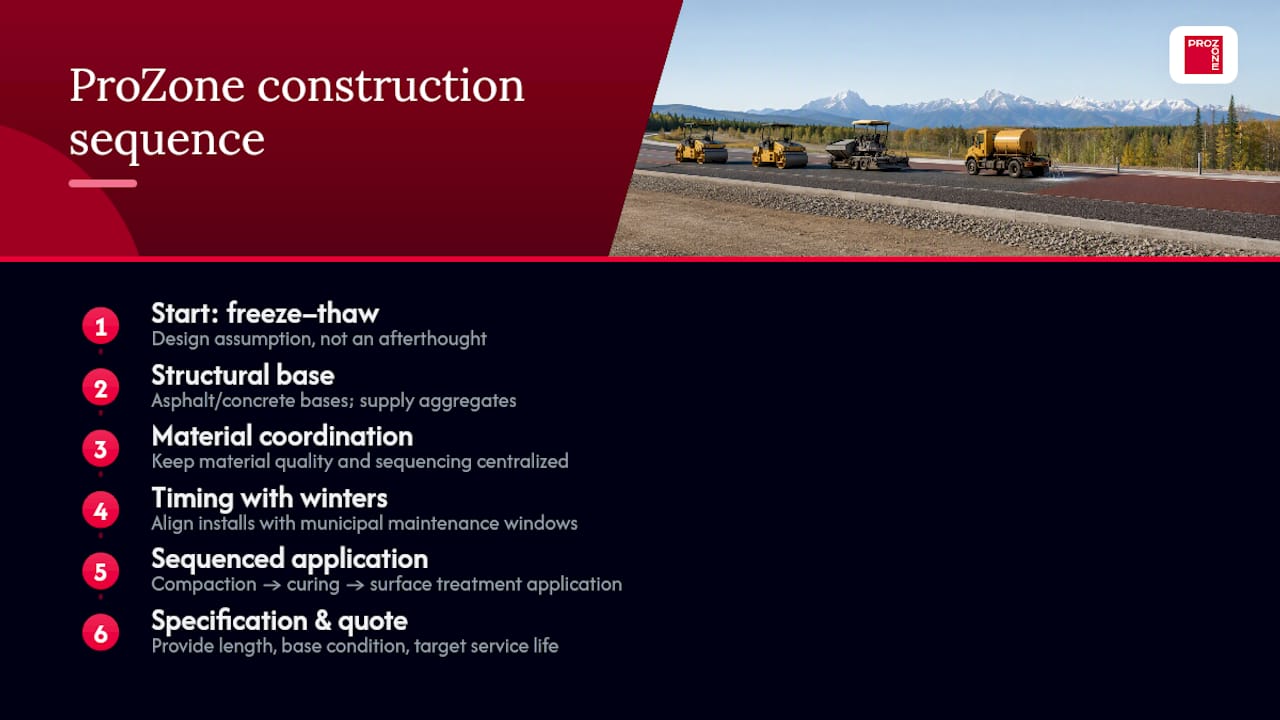
Coordinating installation timing with municipal winter maintenance windows matters as much as the material choice itself. ProZone sequences base compaction, curing, and surface treatment application to avoid the freeze windows that compromise long-term bond strength.
Ready for a specification review or a free estimate? Contact ProZone through our online form or by phone, and have your lane length, base condition, and target service life ready. That information lets us return an accurate quote on the first call.
— ProZone
Why Prozoneltd is the right supplier for your next bike lane project
A practical approach avoids piecing together surfacing projects through multiple disconnected trades. Rather than subcontracting base work, surfacing, and supply separately, handling these services under one contract cuts scheduling risk and keeps accountability centralized.
That matters most in Alberta, where a narrow construction window between freeze-thaw seasons punishes any delay. Municipal and commercial clients researching road construction for municipalities and commercial properties benefit from a team experienced with local frost depth, compaction standards, and winter maintenance coordination.
If your project needs base construction, drainage detailing, and durable surface treatments specified and installed to hold up through repeated Edmonton winters, request a free estimate through the ProZone contact form or by phone. Bring your target lane length, current base condition, and desired service life to the call, and you’ll walk away with a scoped, realistic quote.
Sources
- Calgary roads construction standard specifications
- Winter maintenance of cycling infrastructure in Canada: building year-round active transportation networks
- Thermoplastic Pavement Markings | StreetBond
FAQ
What is the most durable bike lane surfacing material for winter climates?
MMA resin and thermoplastic systems built over a structural asphalt or concrete base offer the strongest combination of plow resistance and skid resistance for winter climates.
How thick should preformed thermoplastic be for a bike lane?
Preformed thermoplastic for bike lanes is typically specified around 90 mil, compared to roughly 125 mil for road applications, balancing durability against rider comfort.
Why do painted bike lanes fail faster than other surfacing options?
Paint wears away quickly under repeated plough contact and doesn’t resist salt exposure well, while resin and thermoplastic systems hold up considerably longer under the same conditions.
What base thickness does a bike lane need in a freeze-thaw climate?
Base thickness depends on expected traffic and local frost depth, but municipal standards like Calgary’s construction specifications provide benchmark compaction and thickness guidance that Alberta specifiers commonly reference.
Can ProZone supply and install bike lane surfacing materials in Alberta?
ProZone supplies structural asphalt, concrete, road crush aggregates, and thermoplastic or StreetBond surface treatments, and installs them as a coordinated project rather than separate contracted pieces.